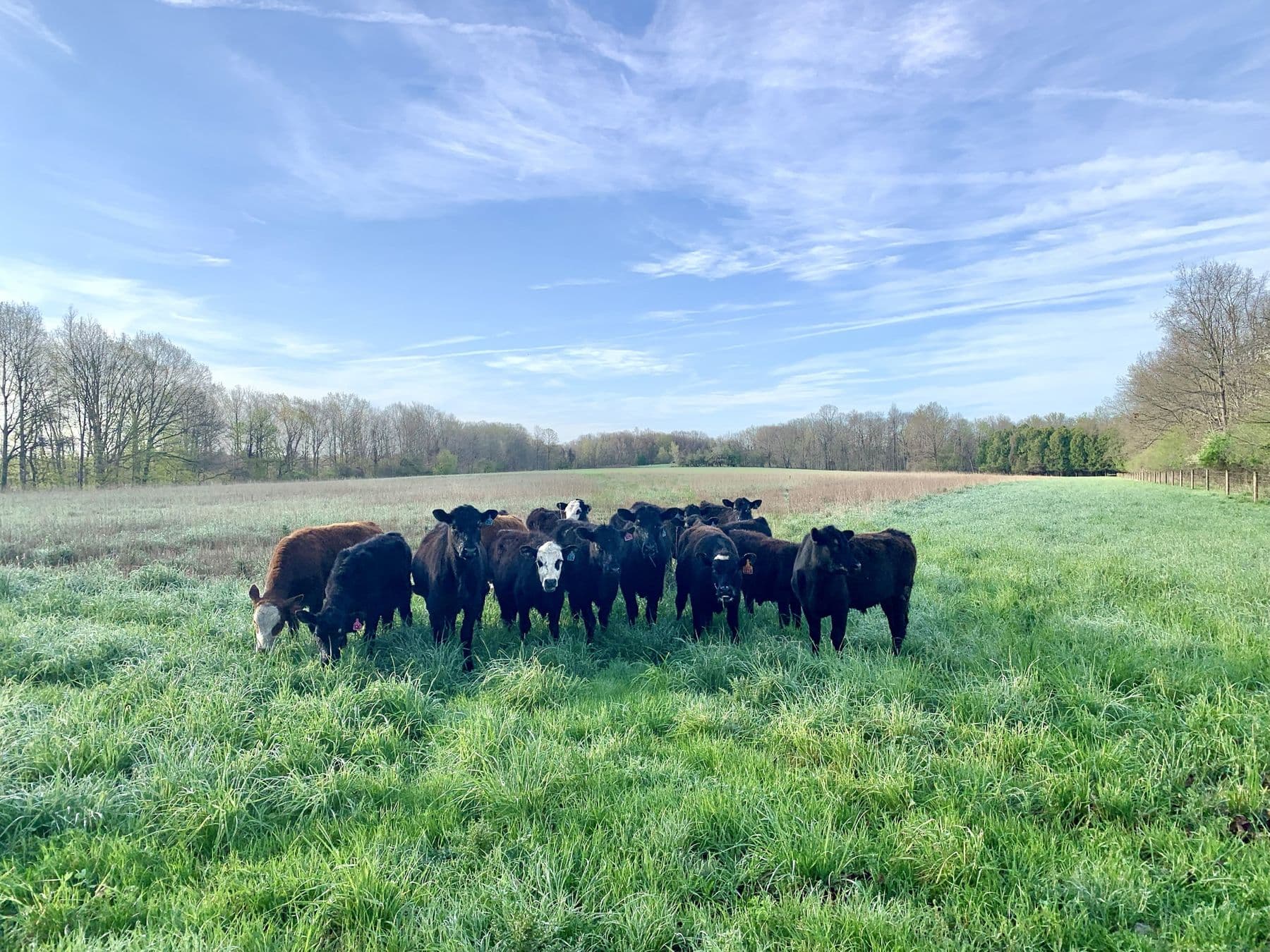
Organic because we believe in it. The cattle build the pasture and the pasture builds the cattle; that's how it's worked for a very long time. We didn't invent it. We just try to be good stewards of it.
Beef shares from a small family farm in Caledonia, New York — quarter, half, or whole.
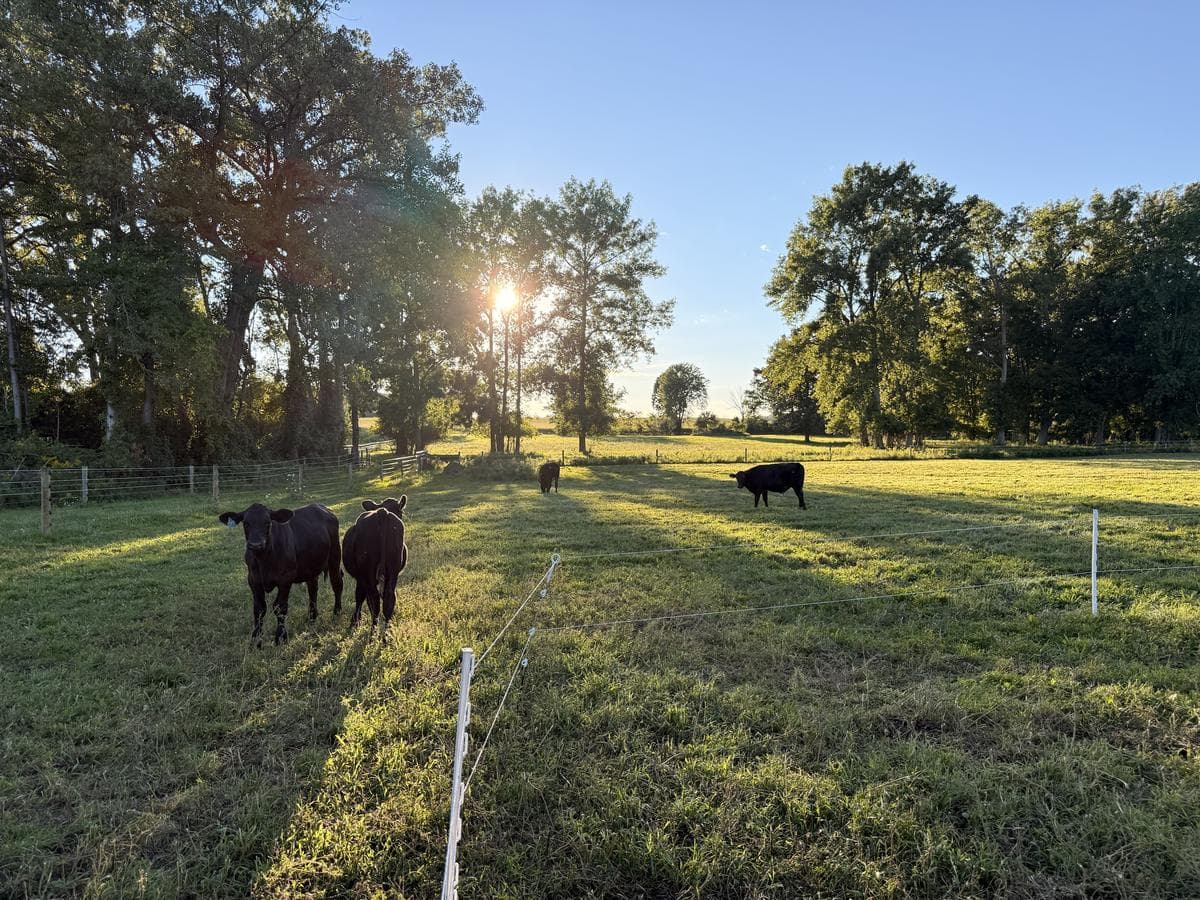
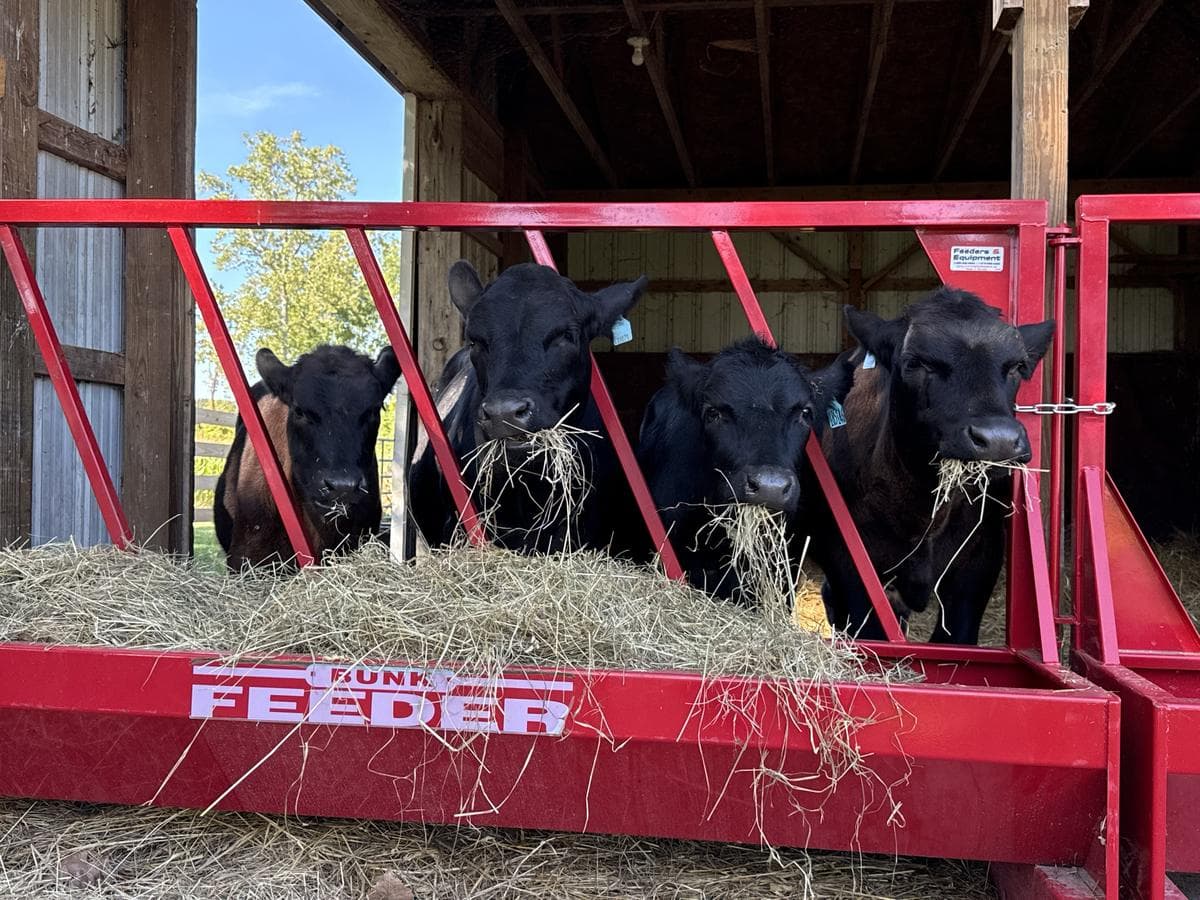
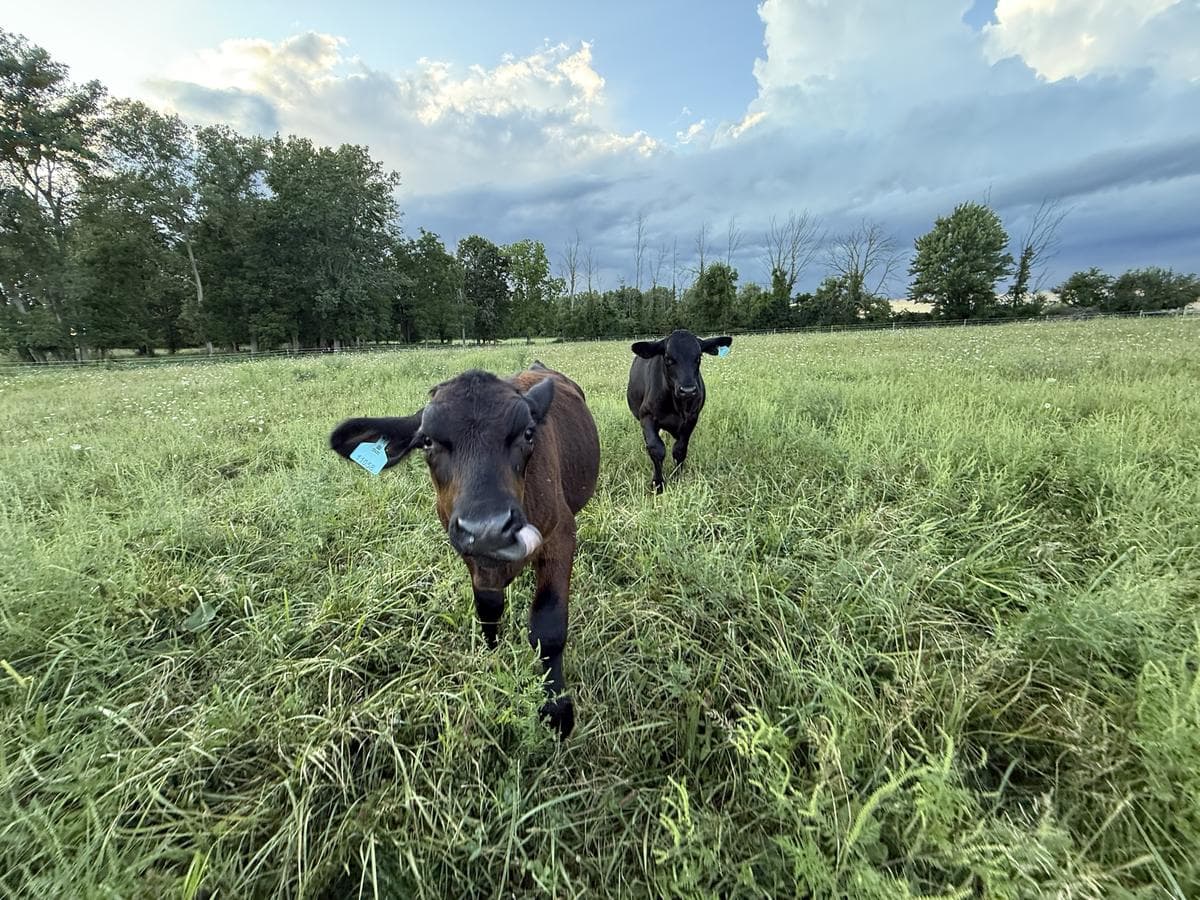
Our cattle come to us as calves from neighboring farms and are raised here in Caledonia. From the day they arrive to the day they leave, they eat the same two things: our own organic grass in the season and hay in the winter, and certified organic grain from Keystone Mills every day alongside it.
Certified organic beef has to be processed at a certified organic butcher, and there isn't one anywhere near us. Rather than truck our animals hours away, we work with a local custom butcher we trust. So the certification stops at the farm gate; the practices don't.
You're buying a share of a live animal from our farm, and a local custom butcher processes it for you. Four steps, and we walk you through each one.
Choose a quarter, half, or whole and tell us which animal you want to be on. We confirm within a day or two and send you a deposit link.
We'll tell you when your animal is scheduled at the butcher, usually a few weeks out.
Steaks thick or thin, roasts or more ground, bone-in or boneless. You choose online and we pass it to the butcher.
Once the animal is at the butcher we know the hanging weight, and your balance to us is due then. About two weeks later the butcher calls: you pay them for processing, pick up your paper-wrapped, labeled, frozen beef, and load up the coolers.
Shares come as a quarter, half, or whole animal. Pick the month and size that fits, send a request, and we'll confirm within a day or two.
A typical whole animal hangs around 840 lb; a half about 420, a quarter about 210. You take home roughly 60–65% of hanging weight as packaged beef, depending on your cut sheet.
Why shares? In New York, a farm can't sell you beef by the cut without a USDA-inspected plant. What we sell is a share of a live animal; the custom butcher then processes your share for you. That's why pricing is on hanging weight and processing is a separate bill from the butcher.
A quarter hangs around 210 lb, and you take home roughly 60–65% of that as packaged beef — call it 125–135 lb — depending on how you have it cut. A half is about double, a whole about four times.
Rough rule: about 35–40 lb of packaged beef per cubic foot. A quarter fits in a 5 cu ft chest freezer with a little room; a half wants 8–10 cu ft; a whole needs 15 cu ft or more. A standard kitchen freezer won't hold a quarter.
Two bills. You pay us per pound of hanging weight ($7.25 quarter, $7.15 half, $7.00 whole), and you pay the butcher directly for processing when you pick up. The final number depends on the animal's actual hanging weight, so we can only estimate until the animal is butchered.
A quarter is one half of a side, so the butcher cuts that side one way. That means the two quarter customers on an animal share a few decisions: steak thickness, packs per package, and roast size. The first to fill out a cut sheet sets them; the second sees them already chosen. You still decide what you keep and what becomes ground beef. On a quarter the loin comes bone-in as T-bones and porterhouse (no filet or strip), and cube steak and patties aren't offered. Halves and wholes have none of these limits.
Yes, and people do. Two families often go in on a half. One of you is our customer for that share and fills out the cut sheet; how you divide the boxes is up to you.
Just how you'd like it cut and packaged: steaks thick or thin, roasts or more ground beef, bone-in or boneless. Our cut sheet walks you through every choice with plain explanations and sensible defaults. Most first-timers finish it in ten minutes.
A deposit holds your share when you reserve. Your balance to us is due once the animal is at the butcher and we have the hanging weight — that's when the final number exists. Processing is paid to the butcher separately, when you pick up.
New York law. Without a USDA-inspected plant, a farm can't sell beef by the cut. What we sell is a share of a live animal; a licensed custom butcher processes your share for you. It's the standard way small farms sell direct here.
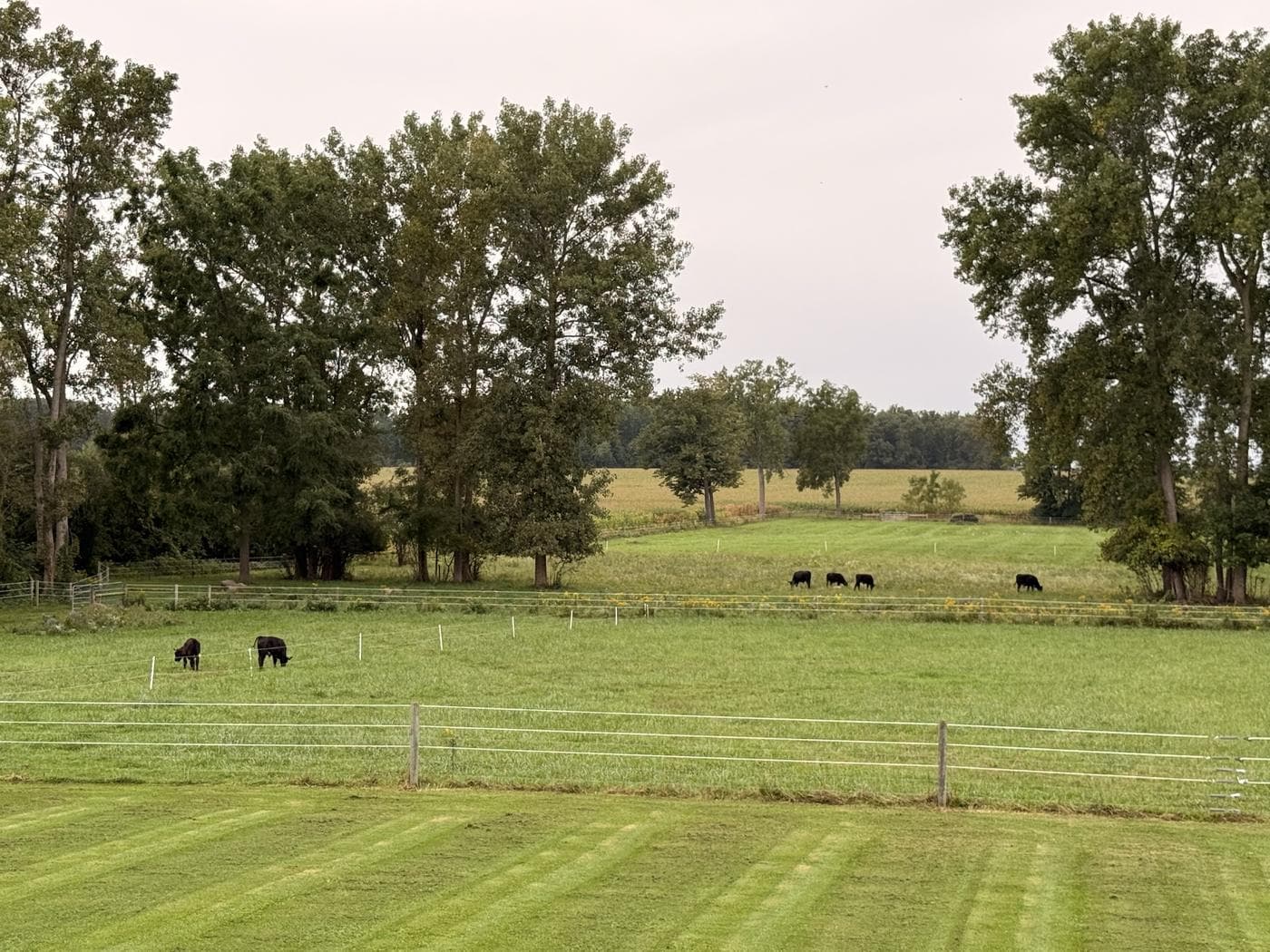
Our cattle are on our pasture roughly eight months of the year and eat our own hay through the winter, with certified organic grain every day alongside. So they're pasture-raised and grass-and-grain fed — not "grass-finished." Here's why we do it this way. Grass-finishing in Western New York means two winters on stored feed and an animal that takes about twice as long to finish, which roughly doubles the cost per pound. Grain builds marbling, and marbling is what makes beef tender and juicy — that's the beef we want to eat and the beef we want to sell. And because our grain is certified organic, it carries none of the things people worry about with feedlot beef — no GMO corn, no confinement, no routine antibiotics. If strictly grass-finished beef is what you're after, we're not the right fit and we'd rather tell you that up front. If you want beef from cattle that lived on grass and finished with organic grain, that's us.
No, and we say so plainly. Our cattle eat our own organic grass and hay plus certified organic grain from Keystone Mills, every day they're here. Certification would require processing at a certified organic butcher, and there isn't one anywhere near us. The practices are organic; the paperwork stops at the farm gate.
We're in Caledonia, NY. You pick up your beef from the butcher, who will call you when it's ready — about two weeks after the butcher date. Bring coolers.
